

I am an administrative agent with an office in Songdo, Yeonsu-gu, Incheon. Here I set down one episode I came across in my work.
There were four automobile tax notices. Same vehicle, different years.
The oldest was from three years ago; the most recent, from two months ago. The amount grew with each one. The penalty additions had been piling up.
The owner of that vehicle had passed away four years earlier.
Two vehicles were left behind
The client was a woman in her late fifties. Her father had died four years ago, and he had left two vehicles.
One was a twelve-year-old van. Her father had used it for a small moving business while he was alive, and since his death it had been parked in front of an acquaintance's warehouse in Gyeonggi Province. She said it no longer ran.
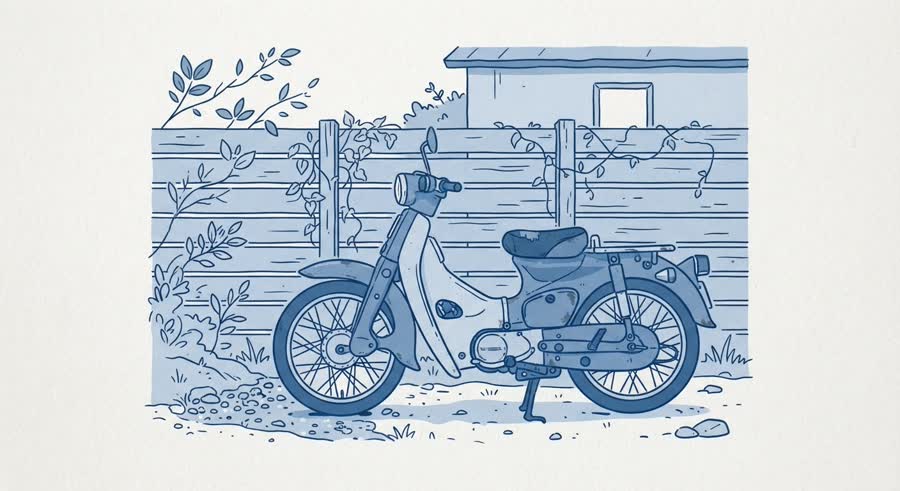
The other was a two-wheeled vehicle — an old, small-displacement model her father rode around the neighborhood. It sat in a corner of the yard at the family home.
The first few months after his death went to the funeral and other arrangements, and after that it became "we'll deal with the vehicles later." Later turned into four years.

Why it was put off for four years
The client had not been negligent. There was a clear reason for the delay.
There were three heirs: the client, her younger brother, and another younger brother.
The problem was the last one. He had been out of contact for more than ten years. His address had changed and his mobile number had been disconnected. He did not come to the funeral.
About two years ago, the client once tried to handle it herself. She called the district office and said she wanted to get rid of her father's vehicles, and she was told that the consent of all co-heirs was required. That was accurate information. As a rule, deregistration of a jointly owned vehicle requires the consent of all co-owners.
So she gave up on the spot. There was no way to find the one brother.
After that, the automobile tax notices kept coming. At first they came by mail to the old address; once the address was sorted out, they came to the client.
What the client was losing
Let me note why this suddenly became urgent.
The accumulated automobile tax ran into the millions of won. That alone was a burden, but there was a bigger issue.
The client had opened a small side-dish shop the year before last. She has a loan and makes monthly payments. No one had explained to her what accumulating tax arrears might mean for a business owner, but she said she felt a vague unease.
And there was one more decisive factor: a piece of mail arrived.
It was an order to enroll in compulsory insurance. The gist was that the vehicle had been left without mandatory insurance and must be enrolled.
She said that when she saw that document, she thought for the first time, "This isn't something I can just leave alone." She called to book an appointment that same week.

The enrollment order starts another clock
At the first consultation, I looked at that notice first. I needed to check the date.
If an order to enroll in compulsory insurance goes unfulfilled beyond a certain period, it becomes grounds for the mayor or provincial governor to deregister the vehicle ex officio. The period is one year.
Here I told her two things at once.
First, this is not only bad news. It also means there is one more route by which an abandoned vehicle can get cleared up.
Second, that does not mean waiting is the answer. Being cleared up ex officio and being cleared up by the owner's side differ in what accrues in the meantime. Even while you wait, the clock on taxes and fines keeps running. And we have no say over when or how an ex officio deregistration will proceed.
So there was only one direction: handle it from our side.
Checking the date on the notice, a year had not yet passed. In other words, we were still in the window where we could act.

We decided to treat the two vehicles separately
Early in the consultation, one thing was settled: we would not bundle the van and the two-wheeler into a single case.
There was a reason. Automobiles and two-wheeled motor vehicles are managed under different frameworks.
Automobiles are managed within the registration system, and deregistration is handled by the registration authority. Two-wheeled motor vehicles, by contrast, are managed under a use-report system, and the filing window is at the eup/myeon/dong administrative welfare center.
So although both were "vehicles my father left," the offices and documents are different. If you go to one place on one day trying to resolve both at once, you will make a wasted trip.
The level of difficulty differed as well. The two-wheeler was far lighter. So we set the order this way: finish the light one first, and spend our time on the heavy one.
The client was puzzled at first. Shouldn't the bigger problem come first? I explained that finishing the lighter one first gives you two things. One is a sense that things are moving; the other is that, in the course of obtaining documents, you also secure materials you will need for the heavier case.
In fact, the family-relationship documents obtained while handling the two-wheeler were used as-is for the van.

We started with the two-wheeler
The two-wheeler falls under the use-report system. So when ownership changes or the vehicle is no longer used, the appropriate report must be filed.
I first raised the matter of deadlines. Changes in ownership of a two-wheeled motor vehicle are subject to set deadlines. As a rule, a sale must be processed within 15 days, a gift within 20 days, and an inheritance within three months.
Three months for inheritance. Four years had passed.
The client's expression stiffened when she heard this. I told her: the fact that the deadline has passed cannot be undone, but a missed deadline does not make clearing it up impossible. The part concerning the elapsed period and the procedure to clear it up now proceed separately.
And I added one more thing. If we do not clear it up now, that part will keep growing. Today is the smallest it will ever be.
The actual processing was relatively simple: documents confirming the death and the inheritance relationship, documents on the current condition of the two-wheeler, and the report form. The two-wheeler was already inoperable and had not moved in the yard for years.
I called the competent administrative welfare center in advance to confirm. I asked three things:
① Whether any additional documents are needed when the inheritance deadline has passed ② How they verify that a two-wheeler is currently inoperable ③ How the two-wheeler side is handled when there are several co-heirs
The third was the key. The answer is something that must be confirmed directly, since practice can differ by jurisdiction. In this case, though, there was a route that allowed it to be cleared up far more easily than the van.
The two-wheeler was done in two weeks.
The van — the wall of unanimous consent
The van was the main event.
The rule is as noted above. Deregistering a jointly owned vehicle requires the consent of all co-owners. A vehicle that has passed by inheritance into the names of all co-heirs falls into this category.
So for the past several years, consultations of this type have mostly ended the same way: "There is nothing the reachable heirs can do on their own." The vehicle stays put, the taxes pile up, and no one can touch it.
However, a new exception has been introduced here.
Its purport is to permit deregistration as an exception, limited to cases where there are circumstances making it difficult to obtain the consent of all co-owners and the vehicle has no remaining realizable (resale) value.
Where this exception matters is clear. A consultation of the kind "My brother can't be reached, so I can't get rid of my father's car" has now become a case with room to argue.
But caution is needed here. This exception does not mean anyone can deregister unilaterally. Two things must be substantiated.
One is the circumstances making consent difficult to obtain; the other is that no realizable value remains.
The specific standards of substantiation and the documents to be submitted may vary depending on how the competent registration authority operates, so they must be confirmed before applying. That is what we did.

We turned each of the two points into evidence
Once confirmed, what was needed was clear: turning each of the two claims into documented evidence.
1) Circumstances making consent difficult to obtain
Simply writing "he cannot be reached" is not enough. There must be traces of attempts to make contact.
So we assembled the following:
- The last known address confirmed through resident registration documents, and a record of registered mail sent to that address. We kept the envelope returned as "addressee unknown" exactly as it came back.
- Call records of attempts to reach him at the number we knew, including the screen showing the number was no longer in service.
- A statement of facts written by the other brother (the one who could be reached), stating that there had been no contact for more than ten years and that he did not attend the funeral.
- Confirmation statements from two relatives.
What matters here is the order. I sent the registered mail first, and only after receiving it back did I finalize the application. The returned envelope is the cleanest evidence of the fact that "contact was attempted but did not reach him."
The client asked, "We already know it won't arrive, so why send it?" I told her that what we know and what remains on paper are different. What we know becomes a claim; what remains becomes evidence.
2) That no realizable value remains
This side was relatively easy to make objective.
- The vehicle's model year and mileage
- Materials on its inoperable condition. It had not moved for years, and given the state of the battery and tires it could not run under its own power.
- Market price data for the same model year and type
- Confirmation documents from a scrapping-related business
Here I deliberately added one more item: photos of the storage location and the terms under which that space was being used. Since the vehicle had been parked in front of an acquaintance's warehouse, that acquaintance confirmed, in substance, that "it had stayed in this spot for years."
I included this because the assessment of realizable value and the period of abandonment reinforce each other. The fact that it had been left for a long time supports the claim that no value remains.
Scrapping and deregistration are not the same thing
Throughout this case, the client asked me several times: "Isn't it done once I hand it over to a scrapyard?"
This misunderstanding is the most common in practice. And the most expensive.
Scrapping is the procedure of physically dismantling the vehicle; deregistration is the administrative procedure of removing that vehicle from the registration records. The two are connected, but one does not automatically happen with the other.
When handled through a scrapping business, it is common for the business to take the relevant documents and carry the process through to deregistration, but you need to confirm that the process was actually completed. There are cases where people skip that check and only learn the deregistration never happened when an automobile tax notice arrives months later.
Checking is not difficult. Just obtain a document certifying the deregistration. That document is sometimes needed for closing out insurance or other procedures, so it is better to have a copy on hand.
The same applies to stolen vehicles. Filing a theft report with the police does not by itself deregister the vehicle. Only when you obtain the report confirmation and separately apply for deregistration at the registration authority do the automobile taxes and fines accruing after that point stop. People who do not know this can spend years with charges piling up for a car they no longer have.
To sum up: whether a vehicle has physically disappeared and whether it has disappeared from the registration records are separate questions. What matters administratively is the latter.
Each ground for deregistration requires different documents
One more point to note. Deregistration is not a single thing. It is a different procedure for each ground.
- Deregistration due to scrapping centers on scrapping-related certification documents.
- Deregistration due to export is carried out for vehicles slated for export, followed by a report that the export was completed. In some cases you can apply regardless of region, so there is some latitude in choosing the office.
- Deregistration due to theft centers on the theft report confirmation from the competent police station.
- And where, as in this case, the vehicle still exists and ownership is complicated, the core is the evidence substantiating the requirements.
The same word "deregistration" is used, but the documents to prepare are completely different. That is why the first thing I check in a consultation is "Why do you want to get rid of it?" The reason determines which office to go to and which documents to prepare.
On top of this comes one more factor: the mortgage (lien). If a mortgage set up by a capital company or financial institution remains on the vehicle, both deregistration and sale are blocked. Even after the loan is fully repaid, the mortgage is not released automatically. It is cleared only when you obtain documents from the mortgagee after full repayment and file with the registration authority.
No mortgage remained on the van in this case. Still, I checked the registration ledger first to confirm this. Had there been one, there would have been one more step: clear the mortgage first, then deregister.
If you apply without checking the order, you only learn the order after your application is rejected.

What we left out of the application
In drafting the written submission, there were three things I decided not to include.
First, any assessment of the heir who had cut off contact. Not a single line about why he broke off contact or what kind of person he is. What we had to substantiate was "circumstances making consent difficult to obtain," and that is a question of fact. Once an assessment of a person enters, the nature of the document changes.
Second, appeals about the taxes. I did not write at length about how burdensome the accumulated automobile tax was. The requirements for deregistration and the tax burden are separate matters. Mixing other circumstances into a document undergoing a requirements review blurs its focus.
Third, demands about the processing timeline. I did not include any sentence asking them to hurry. Write a demand and it becomes a complaint; write facts and they become evidence.
Instead, I stated the conclusion first in the opening paragraph: that there are circumstances making it difficult to obtain the consent of one of the co-owners, that the vehicle has no remaining realizable value, and that materials confirming each of these are attached.
We looked at the tax and insurance side as well
This was not a case that ended with deregistration alone. Two other matters had to be dealt with in parallel.
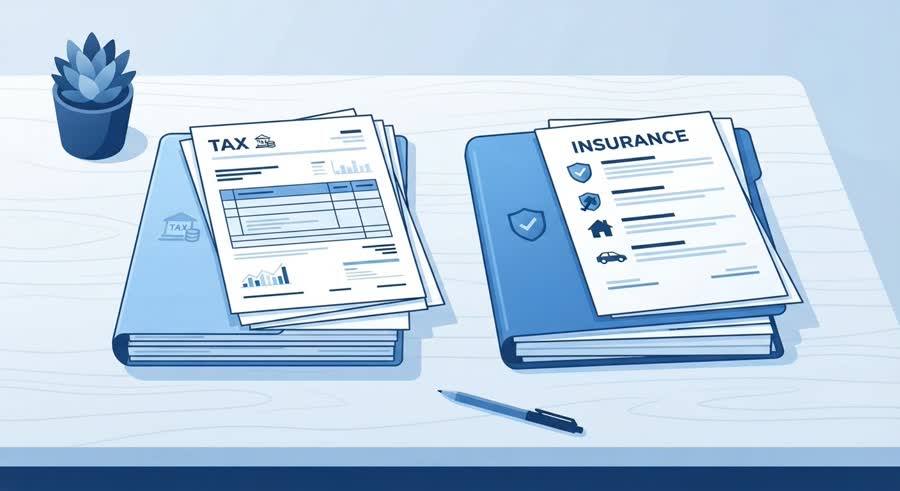
One, the automobile tax. Once deregistered, further charges stop, but what has already accumulated does not disappear. This must be sorted out with the tax department of the competent local government, together with the inheritance relationship. I explained that the share each heir bears varies from case to case, so it needed to be confirmed with the competent tax department.
Two, the compulsory insurance enrollment order. This is the notice we saw earlier. Once the vehicle is cleared up, its very premise disappears, but until then the notice remains in effect. So we informed the relevant department that a deregistration application had been filed and how it was progressing. There is a difference between having the fact that it is in progress on record and not having it.
And I checked one more thing: whether the vehicle had been listed on a used-car website.
The client was surprised by the question. There are cases where a long-abandoned vehicle ends up listed for sale online without the owner's knowledge. Recently, a rule was introduced requiring a person who is not a licensed dealer to obtain the owner's prior consent before posting online advertisements to sell, or broker the sale of, a vehicle owned by someone else. On checking, this vehicle was not affected.
Application for deregistering an inherited vehicle, and the supporting evidence
In this case, we confirmed the status of the two vehicles and sorted out the matters relating to the two-wheeler use report. We confirmed the exception requirements for deregistering a jointly owned vehicle and assembled the supporting evidence, confirmed jurisdiction, and then drafted the application and the statement of reasons. We notified the insurance and tax departments that the process was under way. We put the documents together as a single package so that, even with one co-heir out of contact, the case could proceed all the way to a deregistration application.

One request for supplementation came in
After the application, we received one request for supplementation. It was something we had anticipated.
The request asked us to strengthen the materials concerning the unreachable heir. As I read it, the point was to make clearer the relationship between the authors of the statements we had submitted and the person in question.
A supplementation request like this is not a bad sign. It is not a reply saying the requirements are not met; it means the requirements are being reviewed.
We completed the supplementation within five days. We specified in the statements each author's relationship and how they came to know the facts, and attached documents confirming the family relationships.
I learned something in the process. With a statement, "who is in a position to know it, and why" matters as much as "what was stated." With that one line, even the same content becomes evidence; without it, it becomes opinion.

The outcome
The van's deregistration was processed after the supplementation. The two-wheeler had been cleared up about two months before that.
The whole process took about three and a half months. Much of that was spent waiting for the mail to be returned and on the supplementation period. The time actually spent preparing documents was shorter.
The accumulated automobile tax was handled separately by the client. I heard that after consulting the tax department, she arranged to pay part of it in installments.
On the day I delivered the result, the client said, "So this was something that could be done after all." It was something she had given up on once, two years earlier.
Strictly speaking, two years ago it could not have been done. Part of the system had changed, and knowing that change and building the evidence around it made the difference this time. This happens often in administrative matters: the same case can have a different answer depending on when it is raised.

A container of side dishes
A few weeks later, the client stopped by briefly with a container of side dishes made at her shop. I said I couldn't accept it, but she had already left it on my desk.
And she told me one thing. The fact that her father's car was gone felt bigger than she had expected. While the car was still there, she said, it felt as though her father's affairs were not yet finished.
There was a small mishap, too. On the day the van at the warehouse was dealt with, the client mistook the warehouse's location and went to the next neighborhood over. She drove around for an hour before getting there. In her words, "My father had a poor sense of direction, and so does his daughter."
The result of an administrative procedure usually comes down to a single line in the registration records. Yet what that single line changes in a person is usually not a record.
A few points to leave with you
If you are in a situation like this, try setting the order as follows.
① Do not bundle an automobile and a two-wheeled motor vehicle into a single case. They are managed under different frameworks and handled at different offices. If you finish the lighter one first, you can use the documents obtained along the way for the heavier one.
② Do not give up even if the vehicle is jointly inherited. Unanimous consent is the rule, but a new exception has been introduced for cases where consent is difficult to obtain and no realizable value remains. However, the standards of substantiation and the required documents must be confirmed with the competent authority.
③ Even the fact that "someone cannot be reached" must be turned into evidence. Sending registered mail to the last known address and keeping the returned envelope is the cleanest way. Do not finalize your application before sending it.
④ A compulsory insurance enrollment order is a sign that another clock has started. If it remains unfulfilled for a year or more, it becomes grounds for ex officio deregistration. Rather than waiting, it is better for the owner's side to clear it up.
⑤ In a statement, also write "who is in a position to know it, and why." With that one line it becomes evidence; without it, it becomes opinion.
The requirements and documents for deregistration vary depending on the vehicle's condition, the ownership relationship, and how the competent authority operates, so each case must be confirmed individually.
This article is reconstructed from actual consultation cases; the people, business names, place names, and figures that appear are unrelated to any specific individual or case.
※ This is a fictional case reconstructed to aid understanding.