

I am an administrative agent (행정사 — a licensed specialist who prepares administrative filings and permits on behalf of clients) with an office in Songdo, Yeonsu-gu, Incheon. Here I set down one episode I came across in my work.
In administrative matters, there is rarely only one clock.
License cases are especially like that. The clock for an objection and the clock for an administrative appeal run separately. Yet many people believe they are one and the same.
So this happens. Someone files an objection and waits for the result. Two months pass before it comes. The result is unfavorable, and when they turn to an administrative appeal, they find that its deadline has already passed.
Waiting was not the mistake. They simply did not know there were two clocks.

The truck was his workplace
The client was a man in his late forties. He does pre-dawn deliveries in a one-ton truck, on a route that covers Incheon and southern Gyeonggi. He has been doing it for eight years.
In this line of work, a license is not a qualification — it is the job itself. A suspension means taking a few days off. A revocation means the job is over.
His family is his wife, a son in high school, and a daughter in middle school. His wife works as a care worker. He still had two years of installments left on the truck.
It happened the morning after a company dinner. The drinking had gone on late the night before, and at dawn he got up and drove as usual. He thought that since he had slept, he was fine.
He was stopped in the morning. The measured level exceeded the threshold for revocation.

He let three days go by
He came to our office on the third day after receiving the notice of the disposition.
I asked what he had done during those three days, and he said he hadn't managed anything. He spent two days finding someone to cover his deliveries, and the remaining day thinking about how to tell his wife.
There is a reason I write this down. Most of the people I meet in consultations come after a few days like that. Those days are not wasted. They are the time a person needs to take in bad news.
But during that time, the deadline keeps shrinking. That is why the first thing I do in a first consultation is always the same: check the dates.
This time there was room. Only three days had passed. Coming in this quickly is actually rare.

Three things checked in the first minute of a consultation
After the dates, there are three things to check. These three determine which paths are open in the case.
One, the blood alcohol level. Two, whether there was an accident causing injury to a person. Three, whether there was a refusal to take the test, flight from the scene, or assault on the enforcing police officer.
I also look at one more: whether there has been a drunk-driving record within the last five years.
The reason I look at these first is that an objection has exclusion grounds under which mitigation is not possible at all.
Causing a traffic accident with personal injury while drunk, refusing a breathalyzer request, fleeing, assaulting the enforcing officer. If any one of these applies, it is realistically hard to expect mitigation through an objection.
What happens if you skip this check and start preparing documents? You spend time and money and only then learn that you "do not qualify." And meanwhile, the deadline on the other side has shrunk.
Fortunately, the client had no accident. He complied with the test, and he had no drunk-driving record within five years. The level exceeded the revocation threshold, but it was within a range where mitigation could be discussed.
So it was a case in which an objection could be considered.

Why there are two clocks
This is where I explained the two clocks I mentioned earlier.
An objection is filed within sixty days from the date the disposition was received, with the commissioner of the metropolitan or provincial police agency with jurisdiction over one's address. A driver's license administrative disposition objection review committee deliberates and decides.
An administrative appeal is filed within ninety days from the date one became aware of the disposition. Because a license disposition is made by the police, it is handled by the Central Administrative Appeals Commission.
What matters is that these are two separate tracks. Filing an objection does not stop the clock on the administrative appeal.
If you don't know this, you fall straight into the trap described above: you wait for the objection result and pass ninety days. Then only the heavier routes remain.
So in practice, one of two approaches is taken: run them in parallel, or, if the case falls under an exclusion ground, skip the objection and go straight to the administrative appeal.
I recommended running them in parallel for the client, because mitigation was open for discussion in his case.

Why a stay of execution is effectively the main event
I explained one more thing here. A great many people come in without knowing it.
Filing an administrative appeal does not suspend the effect of the disposition.
In other words, while the appeal is pending and you wait for the result, the license remains revoked. Driving during that time is driving without a license.
And it takes time to reach a ruling. Quite a few cases go beyond the statutory processing period, which means it can take several months.
That is where the problem shows. In cases like a license revocation or a business suspension — where, as time passes, the disposition is effectively fully carried out — even winning the ruling cannot give back what has already been lost.
So an application for a stay of execution is filed alongside it — a request to temporarily halt the effect or execution of the disposition.
This is why practitioners say "the stay of execution is the main event." Just as important as arguing the merits — and in real life, even more so — is whether one can keep earning a living while the argument goes on.
For the client, this was especially important. He had two years of truck installments left, and being out of work for a few months would by itself create other problems.

Does driving for a living mean automatic mitigation?
There was something the client asked several times. He said he had read several posts online saying that "people who drive for a living get mitigation."
This needs a precise answer.
It is true that driving for a living is taken into account. But there is no structure in which you get mitigation automatically because you drive for a living.
The axis of review is a balancing of interests: the degree of the violation is weighed against the interests lost through the disposition. This way of judging is called the principle of proportionality.
So it is not the single sentence "I drive to make a living" that produces the result. The key is how concretely that circumstance can be verified.
The same point can look very different:
- "I earn my living by driving." → That is a claim.
- "For eight years I have run the same pre-dawn delivery route; my business registration and contractual relationships and monthly driving records are as follows; and the result of checking whether a replacement could be found is as follows." → That is evidence.
What we do is turn the first sentence into the form of the second.
And I said one thing clearly: I cannot guarantee any outcome. There are statistics indicating that in this type of case, about two in ten claims are granted, and even that figure includes mitigation from revocation to suspension. I neither understate that number nor overstate it.

The two procedures look through different eyes
After deciding to proceed in parallel, I did not write the two documents with the same content. The bodies reviewing them are different, and they look at things differently.
The objection is written to the mitigation criteria. In the language of those criteria, it sets out that no exclusion ground applies and that there are circumstances worth considering for mitigation. The focus here is whether the requirements are met.
The administrative appeal is structured as a challenge to the illegality or unreasonableness of the disposition. When, as in this case, the fact of the violation itself is not disputed, it is written within a balancing-of-interests framework on whether the disposition is excessive. The focus here is balance.
Even using the same materials, the arrangement changes. In the objection I put the absence of exclusion grounds first; in the appeal I put the concreteness of the interests to be lost first.
Now and then I see people copy the two documents and change only the title. Then the focus blurs in both places. The same facts must be ordered differently depending on where they are submitted.
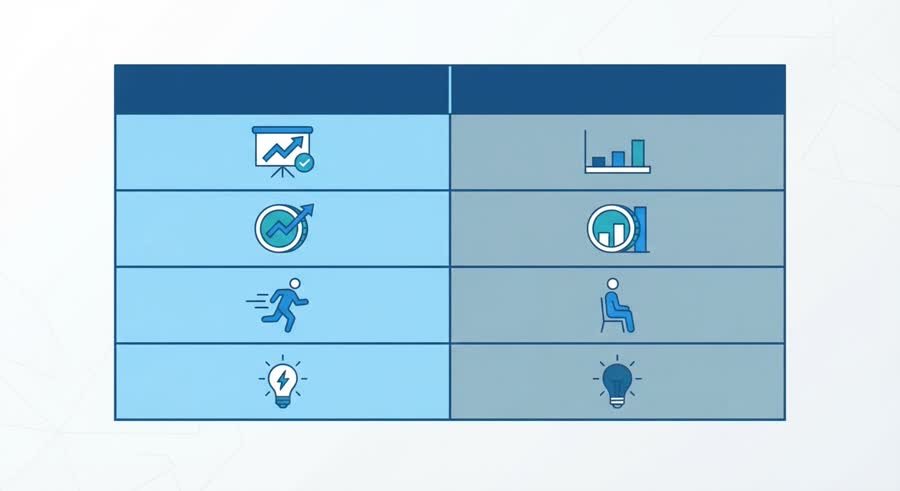
I made this into a table for the client. On the left, the objection; on the right, the administrative appeal. For each: the deadline, where to file, the axis of judgment, what we would prepare. A four-row table.
The reason for making a table like that is not to explain. It is because the client needs something to take out and look at when anxiety sets in during the wait.
The materials were split three ways
The materials we prepared fell into three groups.
1) The facts underlying the disposition
Records of how the stop took place and the test results. This was hard ground to contest. In a case where a level has been measured, trying to shake that number shakes the credibility of the entire document.
So we did not contest this part. The facts were written as facts. Deciding not to contest is also a judgment.
2) The interests lost through the disposition
We spent the most time here.
- Materials verifying eight years of driving and business relationships
- The vehicle's installment repayment history
- Documents verifying family composition and dependency circumstances
- The results of looking into replacement drivers and alternative means
There is a reason the last item was included. The claim "I won't be able to work" carries weight when it is confirmed that "there is no other way." There has to be a process: we looked for alternatives, but for these and these reasons they were difficult.
3) Circumstances after the violation
That he complied with the stop without any accident, that he had no similar record within five years, and that since the disposition he has actually not been driving.
The last item is quietly important. If there is any sign that someone kept driving after the disposition, it becomes a different case at that moment. Conversely, the fact that the disposition is being observed is evidence in itself.

What we left out of the petition
In writing the documents, there were three things we decided not to include.
First, complaints about the enforcement process. The attitude of the enforcing officer came up during the consultation. We did not include a single line about it. The facts are hard to verify, and the moment you include it, the character of the document changes.
Second, emphasis on unfairness. Lines like "I only had one drink" or "I slept, so why" were not written into the documents. The more such sentences you write, the more it reads as disputing the violation itself. What we were contesting was not whether there was a violation, but the severity of the disposition.
Third, demands about the outcome. We did not include sentences asking for a particular level or a particular number of days. Write demands and it becomes a grievance; write facts and it becomes evidence.
Instead, the first paragraph stated the conclusion up front: the fact of the violation is not disputed, the interests lost through the disposition are concretely as follows, and materials verifying those circumstances are attached.
At first the client was disappointed with this approach. He asked why he couldn't write what he wanted to say. I told him this: the words left out of a document do not disappear — they come back as the weight of the sentences that remain.

Why jurisdiction was settled first
There was one more thing to check: which body would hear this case.
In an administrative appeal, the commission that hears the case depends on which authority made the disposition. A disposition by a district mayor goes to the city or provincial administrative appeals commission; a disposition by a police agency commissioner or the immigration side goes to the Central Administrative Appeals Commission.
There is a reason this has to be settled early in the consultation. Each commission differs in processing speed and in how it operates. Get this wrong, and you give the client the wrong expectations.
"It will take a few months" is something you can only say once it is settled where the case is going. Anything said before that is a guess.
For the client, I put the expected flow on a single sheet of paper, together with what he could and could not do during that period. The item "do not get behind the wheel during this period" I wrote in bold.

Three common misunderstandings
When I consult on this topic, three misunderstandings come up almost every time.
One: "If the objection fails, the administrative appeal will fail too."
Not so. The two procedures differ in both the deciding body and the axis of review. The objection looks at whether the set mitigation criteria are met; the administrative appeal looks at whether the severity of the disposition is in balance. Failing in one does not decide the conclusion of the other.
Two: "Once it's filed, it will move along on its own."
Filing is the beginning, not the end. If a request for supplementation comes, you must respond within the deadline, and there are also points at which to add materials. If you just file and don't take calls, everything you prepared stays buried.
Three: "Revocation or suspension, you can't drive either way, so it's the same."
This completely misjudges the weight of the outcome. With a suspension, once the period ends you get your original license back. With a revocation, you must obtain a license again, and before that you have to wait out a disqualification period. For someone whose workplace is a truck, it is the difference between months and years.
There is a reason the third misunderstanding is particularly dangerous. If you think "it's the same anyway," you won't contest it. And if you don't contest it, the room for adjustment to a suspension disappears as well.

The line we did not cross
Twice in this case, I told the client it was not our office's work.
The first time was the criminal proceedings. Drunk driving triggers criminal proceedings separately from the administrative disposition. I only explained that the two proceedings run separately, and that statements made in one can appear as material in the other, so the two accounts must not conflict.
The second was insurance. Since there was no accident, it was not a major issue, but a question came up about future premiums. For that, I advised him to check directly with his insurer.
The scope of what we did was clear: confirming the mitigation exclusion grounds, designing the timelines of the two procedures, drafting the objection, the administrative appeal petition, and the application for a stay of execution, collecting and arranging supporting materials, and advising on what to watch out for while the proceedings were under way. That was it.
Drawing the line between what an administrative agent can and cannot do at the outset means the client doesn't have to make the trip twice.

What happened during the wait
While the proceedings were under way, two things happened.
One was good. One of his business clients learned of the situation and said they would keep his spot open. That fact became evidence as it was. A real place to return to means the interests lost through the disposition are not abstract.
The other was hard. By the second month, the household finances had become visibly strained. I heard that his wife had increased her working hours and that their son had dropped one of his after-school academies.
The client called once during this period. He asked when the result would come, and whether it would be all right to drive, just briefly.
On that point alone, I was firm. I told him that much of the material we had built up stood on the fact that "he is observing the disposition." If that collapsed, nothing would be left.
After that call, the subject never came up again.

The outcome
It concluded with the revocation being adjusted to a suspension. The suspension period was one hundred and ten days.
It was not a shorter result than the client had hoped for. One hundred and ten days is a long time too. But there is a big difference between revocation and suspension. With revocation you must take the test again, and a disqualification period follows. With suspension, once the period ends you get your original license back.
The whole process, from filing to conclusion, took about four months.
During the suspension, the client stopped doing deliveries and did other work. I heard he did loading and unloading at an acquaintance's warehouse. The truck stayed parked, and the installments kept going out.
After the period ended and he was back behind the wheel, he stopped by once. What he said that day stays with me. He said that when he started the engine at dawn, his hands were shaking. Not because it had been a while, but because only then did it truly sink in that he had nearly lost it.

One small commotion
There was also one episode you couldn't help but smile at.
While we were preparing the documents, there was a day the client was supposed to bring in his driving records. That morning he called. He had left the documents in the truck — and the truck was at the repair shop.
The shop hadn't opened yet. In the end we moved the appointment to the afternoon, and that day the office briefly held the smell of engine oil fresh from the repair shop.
He himself said, "The truck went to work in my place."
Administrative procedures run on paperwork, but what brings that paperwork in is a person's day. If you plan the schedule knowing what that day looks like, there are fewer wasted trips.

A few things to leave with you
If you are in a situation like this, try setting the order like this.
① First, know that there are two clocks. An objection is sixty days from the date the disposition was received; an administrative appeal is ninety days from the date you became aware of the disposition. Filing an objection does not stop the administrative appeal deadline.
② Check the mitigation exclusion grounds first. If there was any one of an injury accident, refusal to take the test, flight, or assault on the enforcing officer, it is hard to expect mitigation through an objection. This check comes before preparing documents.
③ Don't forget the stay of execution. Even after filing an administrative appeal, the disposition remains in effect. In cases like license revocation or business suspension, where the disposition is fully carried out as time passes, this is effectively the main event.
④ Saying you drive for a living is not enough. It needs to be turned into verifiable materials such as driving records, business relationships, dependency circumstances, and the results of looking into alternatives.
⑤ Observe the disposition while the proceedings are under way. That fact itself is evidence. A single exception erases everything built up so far.
The requirements and procedures for mitigation vary depending on the level, prior record, and whether there was an accident, and they are frequently amended, so each case needs to be confirmed with the competent authority.
This article is reconstructed from actual consultation cases; the people, business names, place names, and figures that appear are unrelated to any specific individual or case.